
How It Works
What Happens In A Dyslexia Assessment, Step By Step
What happens in a dyslexia assessment with Dr Lauren Crumlish (PhD), Certified Practising Speech Pathologist, comes in three parts. Before the day, you gather what the school and earlier checks have shown. On the day, your child works one to one with Dr Lauren on a video call. Afterwards, she takes you through what she found. It is for school-aged children and teenagers up to 18, anywhere in Australia.
Part One
Before The Day
Most of the preparation is gathering what already exists. None of it is homework for your child.
-
Apply
Describe your child, the reading and spelling worries and the school’s view in the application form. Our team reviews it. A place depends on Dr Lauren’s availability, and not every application receives an individual reply.
-
The level and the fee are settled
The fee is known before the assessment goes ahead. The two levels, what each costs and how the level is chosen are set out further down this page.
-
Gather the paperwork
School reports, NAPLAN results and any earlier assessments, such as speech pathology, psychology, occupational therapy or learning support. A recent piece of your child’s own writing is worth having on hand too.
-
Check hearing and eyesight
If either has not been checked recently, arrange it first through your GP, an audiologist or an optometrist. A child who cannot see the print or hear the sounds clearly struggles to read for a different reason.
-
Set up the device and the room
A computer or tablet with a camera and microphone, a steady internet connection, and a quiet room with a table. A larger screen is easier to read from. Test the camera and sound the day before.

Part Two
On The Day: What Your Child Does, And What You Do
Your child is the one Dr Lauren works with. Over the call they read aloud, write words down, listen and answer, and talk, while she notes how each answer is reached as well as whether it is right. Some parts will feel easy and some are meant to be hard, because an assessment has to find the edge of what a child can do. Your part is below.
-
Open the video call and check your child can see and hear Dr Lauren
-
Stay beside your child or nearby, close enough to help if the connection drops
-
Keep water, glasses or hearing aids if your child wears them, and anything else Dr Lauren has asked for, within reach
-
Leave the answers to your child. A hint, even a kind one, hides the thing the assessment is looking for
-
Tell Dr Lauren if something is off, such as a poor night’s sleep, a cold or a dropped connection
Part Three
Afterwards
The assessment ends with an explanation, not only a set of scores.
-
Dr Lauren explains what she found
Where reading and spelling are breaking down, which skills underneath are involved, and how your child compares with others the same age.
-
You hear what to work on next
That includes whether a psychologist’s assessment is a sensible next step for your family.
-
You decide what happens next
Sharing the findings with the school, seeing a psychologist and continuing with Dr Lauren are each your decision.
What Does A Dyslexia Assessment Involve?
A dyslexia assessment with Dr Lauren Crumlish involves reading, spelling, listening and speaking tasks. Together they look at six areas: sound awareness; phonological and working memory; rapid naming; reading rate, accuracy and comprehension; spelling and writing; and oral language. Each area is a different reason reading can be hard. What a weakness in each one means is set out in what a dyslexia assessment looks at.
How Long Does A Dyslexia Assessment Take?
The length of a dyslexia assessment depends on the level of assessment and on your child. Dr Lauren confirms how long it will run, and whether it is one sitting or more, before the day.
How Do I Prepare My Child For A Dyslexia Assessment?
Prepare a child for a dyslexia assessment by keeping it ordinary. A calm child shows what they can really do.
- Say what it is: “You will do some reading, spelling and word games with Dr Lauren on the computer, so we can find out how to make reading easier.”
- Say what it is not. It is not a test anyone passes or fails, and nobody is in trouble.
- Warn them that some parts will feel hard, and that hard parts are expected.
- Choose a time of day when your child is fresh, if you are offered a choice, and keep the hour before it quiet.
- Food, a drink and the toilet first.
- Skip the practice. Drilling reading or spelling the week before changes nothing useful and tells your child the day is something to fear.
How Do I Prepare A Teenager For A Dyslexia Assessment?
A teenager needs the reason more than the reassurance. A teenager who finds reading hard has often spent years working around it, and an assessment asks them to show it to someone new.
- Tell them what the assessment is for: finding out why reading or spelling takes them longer, so the right help can follow.
- Ask what they find hardest at school and pass it on in the application. Their own account is evidence.
- Let them have a say in where they sit and whether you are in the room, and tell Dr Lauren what they would prefer.
- Be straight about the result. Dr Lauren’s assessment shows where reading is breaking down. It is not a formal diagnosis.
Is This A Dyslexia Diagnosis?
No. Dr Lauren assesses reading, spelling and the language skills underneath, and a formal diagnosis of dyslexia is usually made by a psychologist. A family who needs a formal diagnosis will also need a psychologist’s assessment, at that provider’s fee. Which professional does what is set out in who can diagnose dyslexia in Australia.
Which Level Of Assessment?
Dr Lauren recommends the level, $890 or $1,290, once she understands the concerns; what each covers, and Medicare, private health and the NDIS, are in what the assessment costs.

Who does the assessment
Dr Lauren Crumlish (PhD), Certified Practising Speech Pathologist
Dr Lauren Crumlish assesses reading, spelling and the language skills underneath, online, for school-aged children and teenagers across Australia. She holds a PhD from The University of Queensland and does every assessment herself.
About Dr Lauren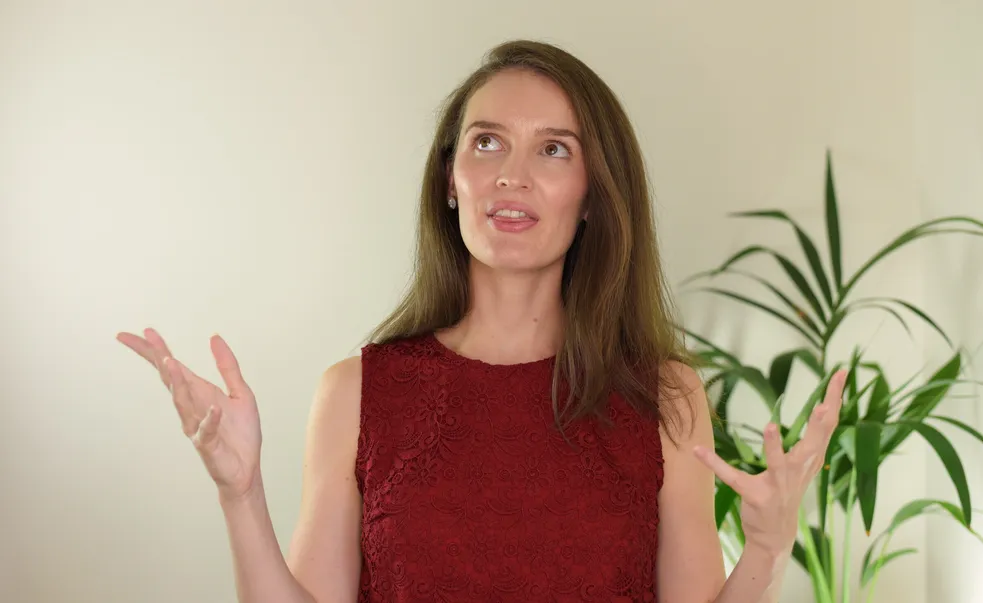
Questions
Questions About What Happens In A Dyslexia Assessment
What happens in a dyslexia assessment?
A dyslexia assessment with Dr Lauren Crumlish runs in three parts. Before the day you gather school reports, NAPLAN results and earlier assessments. On the day your child reads aloud, writes, listens and talks with Dr Lauren on a video call. Afterwards she takes you through the findings.
Does a parent need to be in the room?
A parent sets up the video call and stays close, beside your child or nearby. Either way, leave the answers to your child, because the assessment only helps if it shows what your child can do alone.
What do we need on the day?
A computer or tablet with a camera and microphone, tested the day before, a steady connection, and a quiet room with a table. Glasses or hearing aids, if your child wears them, and a drink within reach.
Should my child practise before a dyslexia assessment?
No. Practising reading or spelling in the days before a dyslexia assessment is unlikely to change what it finds, and it can make a child anxious about the day. The assessment is meant to show how your child reads and spells now.
What happens once the assessment is finished?
Dr Lauren takes you through her findings, and confirms before the day how and when she does that. The guide to reading an assessment report on this site explains the scores and terms you may see.











Dyslexia Assessment With Dr Lauren
Apply Now
Dr Lauren works with a small number of families and has limited availability. Our team will review your application. A place cannot be guaranteed, and not every application receives an individual reply.
Apply Now- Online, Australia Wide
- Reading, Spelling And Language
- Children And Teenagers Up To 18
- $890 Or $1,290